Showing posts with label non-fiction. Show all posts
0

Grand Theft Auto: Why boys aren't reading in September

I posted this last September, but this is clearly an appropriate post since the newest game, Grand Theft Auto V, is out this week and set to sell a billion dollars worth of copies by next month.  So if you didn't see it the first time, here it is again:

Jacked by David Kushner


Grand Theft Auto is an video game series that is entirely inappropriate for teens.  That said, c'mon.  Of course they have played it.  And of course they are waiting with baited breath for GTA V, due out sometime next year.  The series is infamous for its violent and sexual content, what with the brazen murder of innocent pedestrians, police officers and just general wreaking of havoc.  On the other hand, it's also a beautifully crafted series, each generation featuring groundbreaking graphics, freedom to travel the city and just cruise around absorbing the atmosphere.

Jacked: The Outlaw Story of Grand Theft Auto by David Kushner traces the history of the game from its humble beginning as a city simulator to the record shattering sales of the 4th edition that in its first 24 hours of sale made more money than any form of entertainment ever before in the same amount of time.  Grand Theft Auto was and continues to be a major cornerstone of gaming, but before it made it big, it was just a fringe game by a small start-up.

Parallel to the main story, Jacked also discusses the efforts by moral crusader Jack Thompson to get the game banned in the name of protecting child from the violent contained contained in the series.  This obviously never happened, but it serves to create a pretty scary villain for the story of the game.  (Scary, of course, if you like games and want to keep playing them).

The pace is a bit slow for my taste, and doesn't actually get into that much detail about the process, but this is more than I'd ever heard before about the behind-the-scenes of the series, so this is a good, reasonable-length approach to the subject, one that should be able to hold the attention of gamers who enjoy it.

Email Facebook Twitter Favorites More
0

American Gun by Chris Kyle

I'm a suburban Canadian, so you might imagine I haven't spent much (any) time in and around gun culture.  My house had no guns, my friends and extended family had no guns, and aside from the gun range next to the archery range I trained at as a kid, had never seen a gun fired in real life.  (I did have a bunch pointed at me, though, due to a misunderstanding at my then workplace where I accidentally triggered an armed robbery alarm thinking it was a device for removing security tags from clothing).

I don't have any particular interest in firearms, but due to frequent video gaming, I've seen my share of brand names and style in digital form.

American Gun by the late Navy SEAL sniper Chris Kyle tells a brief history of 10 significant firearms that contributed to major points and events in US history, starting with the long guns that tamed the frontier in the early days of the country to the modern weapon of choice, the M16.

This book is a proud American book but a proud member of the military, but he doesn't really make any strong political or loaded statements about guns or gun control.  It's mostly a history of the weapons and their uses, both for good and for evil.

For boys who play a lot of games, particularly first-person shooters and for people just generally interested in military history, this is a good casual read.  It's siimply written and not terribly long.

Email Facebook Twitter Favorites More
0

Periodic Tales by Hugh Aldersey-Williams


Elements, to most people, mean things like oxygen, gold, iron, tin, stuff like that.  Easily identified, popularly discussed stuff.  We may rarely see them in pure form, but we know they are there.  But there is far more to them than that.

Molybdenum.  Strontium.  The town in Sweden that produced eight hitherto unknown elements from one mine, just lying there.  When aluminum (aluminium? Both are right; the discoverer changed his mind a couple of times, and it could have been alumium) was considered a precious metal, not a throwaway for pop cans and cheap cars.

Periodic Tales tells the human story of the discovery, uses or practical lack thereof, and odd value of nearly all of the elements on the periodic table, and explains why in many cases it took so long for them to prove useful. 

Told in a bunch of thematic sections (money, power, things like that), Aldersey-Williams brings out the untold history of so many elements we might otherwise never think about.

Email Facebook Twitter Favorites More
0

The Book of Rule

For the trivia nerd, little bits and pieces of information on any topic will be vacuumed and absorbed into the system.  I did this as a kid (and still do) by reading all the weird little atlases, almanacs and topic guides that I could find. Publisher DK does a great job of this kind of thing for younger kids with the Eyewitness series: visual guides for every little topic.  They do make adult books, too

The Book of Rule explains the system of government of for every country in the world.  Don't know the difference between bicameral and unicameral?  Democracy vs. Republicanism vs. Theocracy?  Absolute Monarchy vs. Constitutional Monarchy?  Is Canada run by the Queen of England? Is their a country where their king is elected? (There is, but the ruler isn't called a king) Who, exactly, elects the US president? (Hint: it's not the people)

I acknowledge that this book is a touch out of date (nearly 10 years old), but generally speaking, the information holds true.  Most countries don't change that much that frequently.
Email Facebook Twitter Favorites More
0

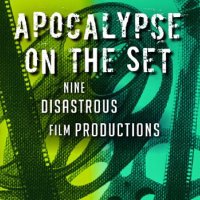
Apocalypse on the Set by Ben Taylor

Movies are fun, and movies that in the process of being filmed went terrible wrong are often even more fun.  Apocalypse on the Set outlines the troubled production of nine movies that didn't quite go as planned.  Though the movies in the book are generally fairly old even today they resonate. 

There's Waterworld, famous for its insanely high production costs and poor reviews (but in retrospect wasn't maybe quite so terrible). There's the Twilight Zone movie that killed its star and two child actors in a helicopter crash. 

Pulgasari is a particularly interesting case: North Korean leader Kim Jong Il kidnapped a respected South Korean director and his actress wife to kickstart the North's film industry.  It worked, for a time, but North Korea isn't the paradise it's made out to be.

Apocalypse is fairly short, with basically an overview of each highlighted film, but for movie-loving kids it's a good taste of how Hollywood and film making really works.
Email Facebook Twitter Favorites More
0

How the States Got Their Shapes by Mark Stein

I'm Canadian, but curiosity knows no borders, so even if the book is almost exclusively about the US, it still catches my attention.  Especially if the book is about borders.  How the States Got Their Shapes is such a book.  In 50 chapters, it explains how each US state became as oddly shaped, regardless of physical geography.  The book is, in other words, exactly what the title says it is.

Shapes is great for history and trivia buffs. the book does provide frequent historical context on why things are, include brief overviews of colonial America, Canada and Mexico, plus plenty of wars.  The chapters are bite-sized, no more than a couple of pages per state, and it does get a bit repetitive, but it is well worth a look.

This would be particularly of interest to fans of Maphead by Ken Jennings
Email Facebook Twitter Favorites More
0

Jacked by David Kushner

Grand Theft Auto is an video game series that is entirely inappropriate for teens.  That said, c'mon.  Of course they have played it.  And of course they are waiting with baited breath for GTA V, due out sometime next year.  The series is infamous for its violent and sexual content, what with the brazen murder of innocent pedestrians, police officers and just general wreaking of havoc.  On the other hand, it's also a beautifully crafted series, each generation featuring groundbreaking graphics, freedom to travel the city and just cruise around absorbing the atmosphere.

Jacked: The Outlaw Story of Grand Theft Auto by David Kushner traces the history of the game from its humble beginning as a city simulator to the record shattering sales of the 4th edition that in its first 24 hours of sale made more money than any form of entertainment ever before in the same amount of time.  Grand Theft Auto was and continues to be a major cornerstone of gaming, but before it made it big, it was just a fringe game by a small start-up. 

Parallel to the main story, Jacked also discusses the efforts by moral crusader Jack Thompson to get the game banned in the name of protecting child from the violent contained contained in the series.  This obviously never happened, but it serves to create a pretty scary villain for the story of the game.  (Scary, of course, if you like games and want to keep playing them).

The pace is a bit slow for my taste, and doesn't actually get into that much detail about the process, but this is more than I'd ever heard before about the behind-the-scenes of the series, so this is a good, reasonable-length approach to the subject, one that should be able to hold the attention of gamers who enjoy it.



Email Facebook Twitter Favorites More
0

Take Advantage of the Batman Craze...

...and get them reading.
CBC Books posted a list of Batman non-fiction books you can highlight at your library for fans of the dark knight.
» Becoming Batman: The Possibility of a Superhero by E. Paul Zehr
» Batman: The Complete History by Les Daniels
» Batman and Psychology: A Dark and Stormy Knight by Travis Langley
» The Essential Batman Encyclopedia by Robert Greenberger
The article gives a brief summary of each, so head on over.

Readers may also be interested in learning more about the Physics of Superheroes.
Email Facebook Twitter Favorites More
0

Tubes by Andrew Blum

The internet is magical.  For the vast majority of us, the internet begins with a hole in the wall and ends on our screens.  And if we use mobile or wifi, I doubt our image would even extend that far. But for all that magic, the internet is nevertheless a real place with physical parts.  Pretty unimpressive ones, actually, a bit like the router in your house: big black boxes with flashing lights and wires coming out all over the place.

Andrew Blum explores these places, visiting server farms that route traffic across the planet, meeting engineers who maintain the hub through which most of that traffic passes, and even paying homage to its creators in the very room where early strides were made, all the way back in the '60s.

This book isn't intended or designed for teens, but given how huge a part the internet plays in the lives of everyone, let alone kids, these days, it's pretty darn neat to see what is involved as something so seemingly simple as sending an e-mail.
Email Facebook Twitter Favorites More
0

Maphead by Ken Jennings

I doubt the name Ken Jennings has much meaning for kids these days.  I can't believe that it's been 8 years since his historic run on Jeopardy!, a 75 episode run that landed him a ton of cash. Nevertheless,  Mr. Jennings spun that time in the spotlight into a writing career, focusing largely on trivia topics, and his books are actually really good.  His first book was a history of trivia itself, the second a sort of daily trivia quiz almanac.

Maphead is his most recent.  Like a lot of young people, he grew up obsessed with maps and geography.  He'd read atlases cover to cover, imagining visting all the little oddities that appear, the funny names, the weird choices of communities that appear over larger, more famous cities.  Here, he visits with mapmakers, collectors and other mapheads who share his obsession.

This book isn't really about maps so much as the people who enjoy them.  Kindred spirits to a lot of young people I know.  Certainly I was like them.  In fact, I recommend all his books for people like that.  Maybe not his forthcoming book, what with being about bad parenting advice.  But read Maphead. and Brainiac. 


Email Facebook Twitter Favorites More
0

Everybody Loves Our Town : An Oral History of Grunge by Mark Yarm

When I was a teen, I hated modern music.  Pop music just washed right over me, and rock music of the day just didn't sink in though I might have preferred it over pop.  My musical tastes were just being formed when the big news hit: Kurt Cobain was dead.  I knew the music, and I knew who he was, but for me, it was all about '70s rock.  My Kurt Cobain was John Lennon, when died when I was a baby.  15 years later, a lot of guys think the same way, but their version of '70s rock is '90s music.  The faces have changed, but the story remains the same.  Modern music sucks; old music is better, end of story. Historical personalities more meaningful, more thoughtful, and just cooler.

Everybody Loves Our Town : An Oral History of Grunge by Mark Yarm tells the story of the music scene that passed me by, but marks a major point in musical history that a lot of young men these days look at the same way I saw Led Zeppelin and the Who.  With interviews with major figures from the Seattle scene, it fills in a lot of details and clears up a lot of myths about what it was really like in the late '80s and early '90s when it hit big.

This isn't for everyone, mind you.  This is best for guys who already know a bit of the history or the music of the era.  Jumping in cold isn't much fun; there are just too many names that wouldn't otherwise mean much.


Email Facebook Twitter Favorites More
0

The Elements by Theodore Gray

I like science, and I really like physics and chemistry, though in a sort of casual way.  I don't know the math behind how gravity affects matter and light, or what ratios of various chemicals are required to make other, cooler explosive chemicals.  There are a lot of good science books out there, but a big problem with a lot of books is pictures: not a lot have them, or at least not in the detail you might want to put things into perspective.

Books about the elements suffer particularly because elements are atoms, and some are incredibly rare.  The Elements solves this problem.  Author Theodore Gray is a bit of an element aficionado, a collector of elements.  He has in his personal collection an example of nearly every element listed in the book, and all of the photographs are from that collection.  A brief description accompanies each item, and the best part, a common use for the element is listed as well.  Oddly, this isn't as common as it should be.

Not really heavy reading, this is a coffee table book, but as science books go, this is a beautiful example.  In fact, the format is so good, there is a follow-up about the solar system.

Edited to add: There is also an iPad app of it, with a few more features.
Email Facebook Twitter Favorites More
2

Grammar Police (really! fun ones!)

There is a certain type of person out there that gets really worked up when grammatical rules are broken or bent.  Years back, Lynne Truss had a breakout hit with Eats, Shoots, and Leaves, a book that demonized bad grammar, poor punctuation, and general awkward phrasing.  Those Grammar Avengers ate it up, but they weren't all adults: these people start young.  Heck, when I was in high school, me and my buddies were very much like this, and some might say I still am.

For a certain type of boy, language books like this are actually a lot of fun.  A recent example stands out as a fascinating tale of grammar-hunting gone mad:  The Great Typo Hunt, by Jeff Deck and Benjamin D. Herson.  In a trip across the US and a brief sojourn into Canada, the authors and friends seek out and attempt to correct grammar errors in signs, posters, and billboards.  They explore shopping malls, restaurants, government offices and national monuments, making whatever corrections they can, and not all changes are welcome.

Other books on grammar and poor application of language are the novelty book series "Signspotting".  These are collections of signs from around the world that are, misspelled, badly translated, or just weird.  engrish.com and failblog.org also feature such uses and abuses of language.  These are along the same lines as F in Exams.

There's plenty more out there, too.  Just check out any facebook post.


Email Facebook Twitter Favorites More
0

The Serial Killer Whisperer by Pete Earley

This sounds like a fiction premise.  It's almost too ridiculous to be true: A teenager gets into a serious accident at summer camp and nearly dies.  Upon awakening, he has changed.  He needs to relearn absolutely everything, incluging how to eat, how to walk, how to live life again. He has a uncontrollable rage, managed only by intense medication.  He loses all his friends, and retreats to books and the internet. There, he becomes obsessed with serial killers, and on a whim, he writes one a letter.  They reply


This isn't fiction.  Tony Ciaglia really found himself in exactly this position, and placed himself as the only friend to some of the US's worst killers.  Over the course of his correspondence, he tries to draw out more information about their crimes, and even tries to elicit more confessions, information and locations of undiscovered victims.  He even goes to visit some of these killers in prison, and discovers that not all of them are as friendly as they seem. (They are killers, after all.  Who'd have guessed?)

The book includes transcripts (odd misspellings included) of the letters the killers wrote, and many of them are disturbing.  It's a fascinating look into their minds, with their rationalizations for what they did.  While I wouldn't recommend this to just any kid because of the occasionally gruesome tidbits, older teens would certainly find it intriguing.
Email Facebook Twitter Favorites More
0

2012: The Mayan prophecies

2012.  According to some, the Mayans predicted the end of the world.  They didn't; December 21st, 2012 is just the date that their calendar rolls over to the next cycle, the same way Monday turns to Tuesday, February becomes March, and the world explodes (well, not that last one).

That doesn't stop people from coming up with all sorts of signs and portents indicating the End of Days (not Eric Walters', though).  One thing almost all of them can agree on is that it will be cataclysmic, violent, explosive, and more.  Hollywood and video games recognize that boys like big booms, so why not lets give them some books, too?

The Complete Idiot's Guide to 2012 is a good start.  As always for this series, the book is accessible and simply written.  While it does tend to take the whole thing seriously, it is still a great entry point into the whole Mayan Apocalypse.

Apocalypse 2012: A Scientific Investigation into Civilization's End by Lawerence E. Joseph takes a deeper look at some of the scientific possibilities, including supervolcanoes, climate change, and changes in the magnetic field.  Again, the author takes the whole prediction thing seriously, but the information is still fascinating.

2012 and the End of the World by Matthew Restall and Amara Solari takes a more restrained look and traces the predictions to Western traditions and predictions.  This is a great door to other traditions such as Nostradamus and other European prophets of doom.

Of course, there is also lots of apocalyptic fiction the suits the theme of the end of the world, including the aforementioned End of Days, plus the Maze Runner trilogy and Life As We Knew It.  There is much more out there, though.

If you have other suggestions, we'd love to see them in the comments!

Email Facebook Twitter Favorites More
1

Unexplained Phenomena

Judging from the response to booktalks I've done, most older elementary and young teen guys are usually intrigued by unsolved mysteries involving deadly monsters, hauntings and extraterrestrials. This interest shouldn't be surprising, seeing as many teen guys are interested in science fiction and horror. Unexplained Phenomena, published by Capstone Press, is a new non-fiction series covering the topics of ghosts, cryptids, aliens and demons.

I took a look at two of the books from the series: Searching for Aliens, UFOs and Men in Black and Tracking Sea Monsters, Bigfoot and Other Legendary Beasts. Each book presents the the information like a mystery case to solve, laying out the evidence (alleged sightings, folklore, scientific facts, etc.), then offering a verdict and/or possible explanations. The layout is appealing, with lots of photos and illustrations and short snippets of text. Information is presented in a variety of ways: diagrams, maps, timelines, photos and coloured boxes with interesting facts. You can easily scan and pick out different parts of each page to read, and you don't have to read all the information chronologically to understand what is being presented. A glossary and lists of recommended books and websites are included at the end of each book.

The text is easy to understand -- but also pretty brief so this probably won't satisfy someone looking for an in-depth or more scientifically detailed read on these topics. The exploration of various scientific and historical explanations just skims the surface and is definitely not comprehensive. I would say this series is more suitable for upper elementary or young teens, as the material is on the simplistic side. Saying that, this series makes for a fun, quick, non-intimidating read. Reading about real-life "Men in Black" and dinosaur species that might still be alive sure kept my attention...

Thank you to Capstone Press for making copies of these books available to the Boys Do Read Blog writers. 

Email Facebook Twitter Favorites More
0

Inventory by The Onion A.V. Club

While targeted at older audiences (20s-30s), the Onion A.V. Club covers a broad range of pop culture topics, including music, movies, video games, comics and more.  Unlike the Onion, though, the news and stories are all real, though they still approach the subject matter with some humour.  Think of it as the online version of your local alternative newspaper, without the, ahem, 'adult' classifieds in the back or the boring local politics.

The website usually delves into the deeper recesses and lesser lights of the entertainment industry, covering bands that don't make the Top 40 and movies that don't win the weekend box office (though they still do that, though generally just to mock them): things that a lot of clever and with-it teenagers seek out to escape the norm.  For example, today's features are an interview with Mark Hamill and a video of They Might Be Giants performing Chumbawamba's Tubthumping.

More relevant to us here is the occasional features that they put up, in this case, the A.V. Club Inventory.  Roughly every week, they produce a list on a random topic, like "11 Videogames That Prompted Fear and Outrage" or "6 Keanu Reeves Movies Somehow Not Ruined by Keanu Reeves".  The lists were compiled into book format and they added a few by celebrities.

The lists are of a general theme, not so much just enumerating movies and songs, but actually giving a short discussion of the merits (or lack thereof) of the subject matter.  While they are often oddly specific (the full title is Inventory: 16 Films Featuring Manic Pixie Dream Girls, 10 Great Songs Nearly Ruined by Saxophone, and 100 More Obsessively Specific Pop-Culture Lists, with emphasis on Obsessive), they often lead to new discoveries, something kids that age are looking for, something obscure that will make them feel special.

Not all of the lists are family-friendly, but that's not unusual for books of lists, and is in fact part of the appeal, the risque.  That does mean that this is more appropriate for older teens, 16 and up, partly because of the mature themes of some of the lists, but also because the older kids are more likely to know the topics of discussion.
Email Facebook Twitter Favorites More
0

Mental Floss

Okay, I get that not all teen boys are trivia nerds.  I was, and so were all my friends, so that might explain part of my bias.  Forgive me for that, but here is the one thing I wished exists back when I was a teen.  Mental Floss.  Started in 2000 at Duke University, it was created as an educational magazine, but fun.  Over the years, it grew into a national publication and featured contributions from such trivia kings as Ken Jennings (best known for winning a whole lot of Jeopardy) and A.J. Jacobs (best known for reading the Encyclopedia Britannica cover to cover). The magazine is now a bit of an empire, with games, T-Shirts, books and a regular trivia blog.  It's those books I'd particularly like to feature.

Mental Floss writers, like the writers at Cracked, rely on humour to make the point.  Historical information is often presented in schools and textbooks as dry, bland dates and names, but here they highlight the oddities and the insane, while still giving the bigger picture of the events.

Two history books, History of the World and History of the United States, cover, obviously, the history of the world and the history of the United States respectively..

Forbidden Knowledge covers more controversial information, facts about crime, drugs, censorship, etc., all sorted by chapter according to the seven deadly sins.  Don't worry, nothing they wouldn't learn in history class.  It's just packaged in a more appealing way.

Be Amazing uses the concept of a self-improvement or how-to books to explain the history of nation-building, x-rays, and pretty much everything else.

A number of smaller books cover more random subjects, including Scatterbrained, What's the Diffrence, Cocktail Party Cheat Sheet.and Genius Instruction Manual, all offering condensed stories of significant cultural and historical people and events.

Because most of the books are bite-sized or at least feature chapters that aren't connected, this is great for quick reading or for short sessions, and the fact that they aren't too complicated make them good choices for guys who don't have a lot of patience for longer material, or claim they don't have time to read.


Email Facebook Twitter Favorites More
0

Classic of the Day: Black Like Me by John Howard Griffin


I've never been a big fan of books that teach lessons and impart moral messages. It's not that I don't think you can learn from books; it just seems to me that teen books in particular are rather upfront about it, and it seems like they cram lessons down your throat. I've never understood why reading can't happen just for fun. Having said that, there are some that really work. Black Like Me is one of those, and I think the premise is a great hook to hang the lessons on.

In 1959, John Howard Griffin dyed his skin in an experiment. He decided to see what life would be like as a black man in the racially divide South of the United States. Without changing his name or the details of his life, he travelled around, even meeting people he knew who did not recognize him. He was entirely unsurprised to find that he was treated differently, poorly.

This is a work of non-fiction, and has many lessons of tolerance and acceptance to teach, and despite what I said above, I liked it. The author was audacious; I'm not sure anyone could get away with what he did today. Given what the author had to deal with both during and after his experiment, it could be argued that he didn't even get away with it.

Email Facebook Twitter Favorites More
0

Mini Weapons of Mass Destruction


Here's another book that will probably make parents and teachers cringe. A step by step instruction manual on making projectiles, catapults, and other wonderful artillery from materials available to any teen -- elastic bands, pencils, string, paper clips and the like.
My favourites are the "claymore mine" that fires candy shrapnel and the Ping Pong Zooka that shoots flaming ping pong balls. (I am seriously tempted to try these projects out...) The book also includes instructions on how to cut out the pages of a book and turn it into a secret hiding place for your weaponry and well as how to make alien and zombie targets. The detailed diagrams accompanying the instructions make it easy to put these projects together. I think this is another one of those great novelty books that will appeal to teen guys (not to mention adults). Besides, what better way to keep yourself occupied during a boring class than make crossbows with rubber bands and pens? (disclaimer: I am not endorsing the use of projectiles in the classroom)
Email Facebook Twitter Favorites More
Related Posts Plugin for WordPress, Blogger...